By Lance Concannon (Meltwater)
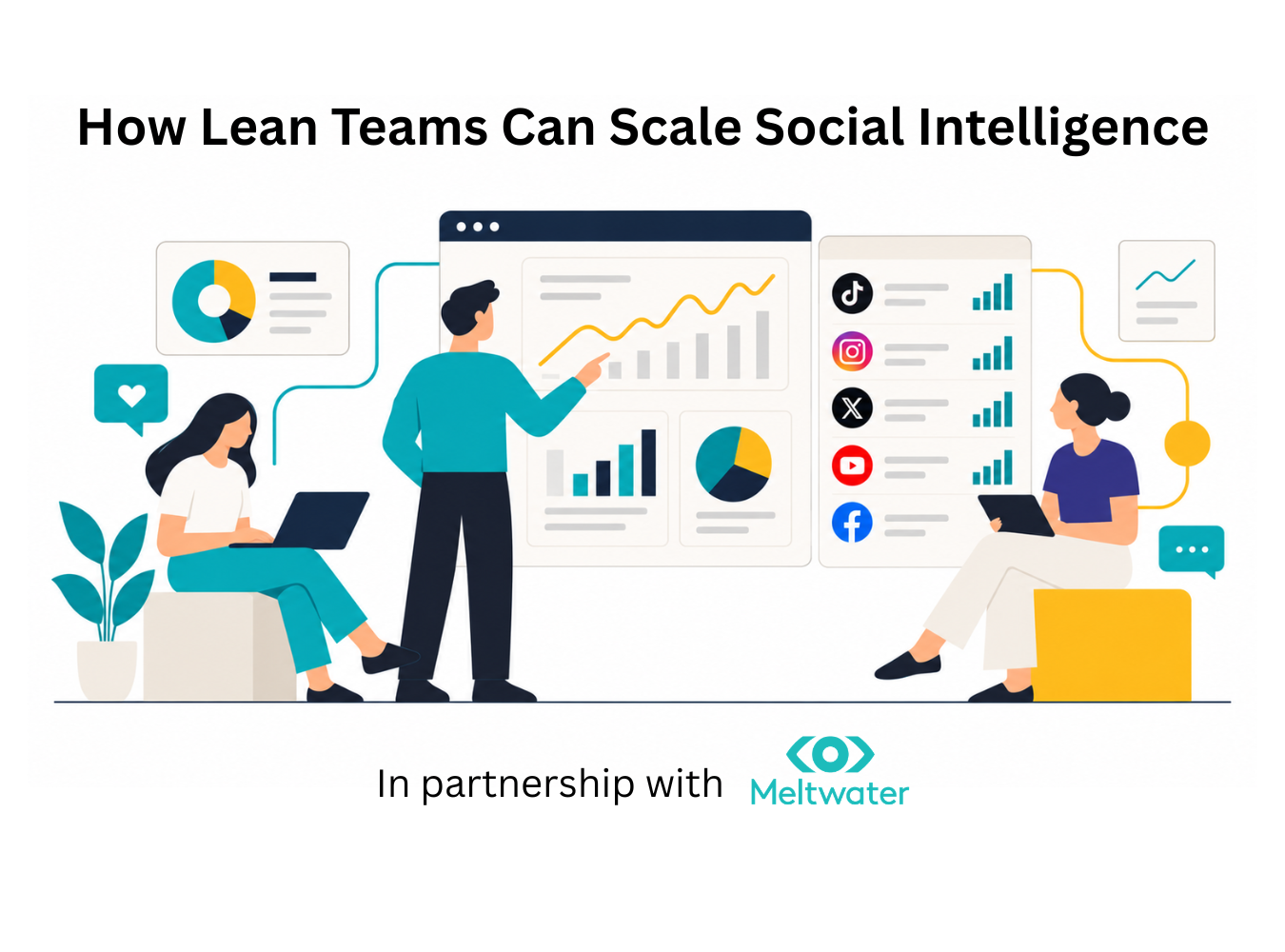
Social intelligence takes more than access to data. Here is how lean marketing teams can combine the right platform, operating discipline, and expert support to produce faster, more useful insights at scale.
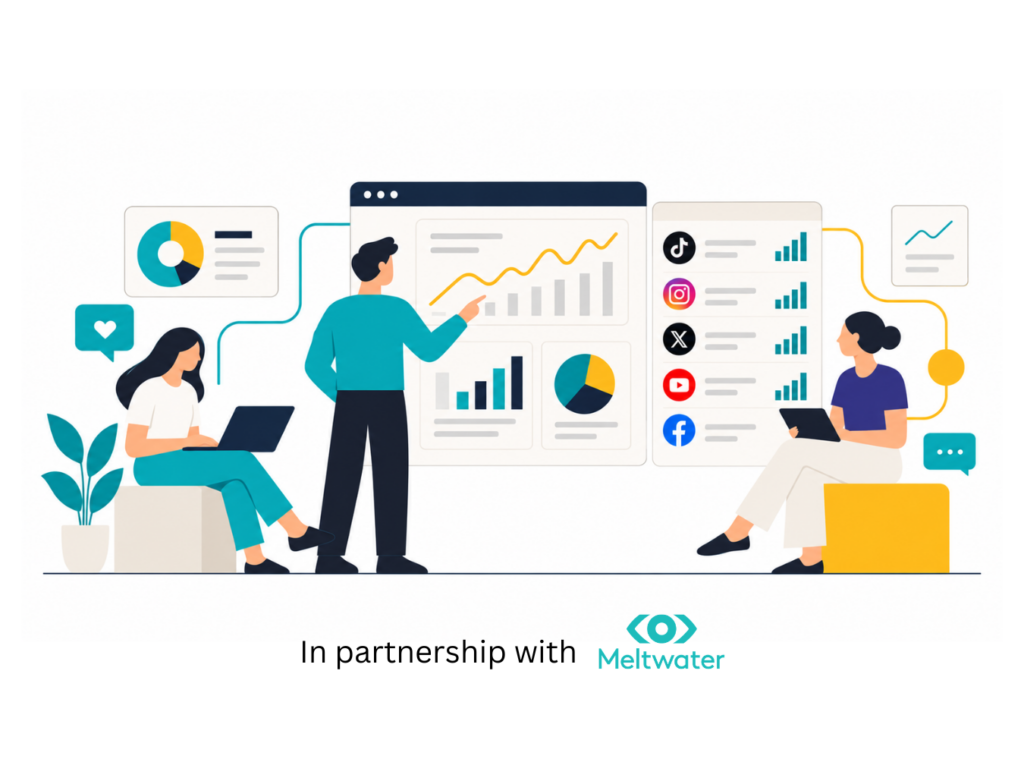
Table of Contents
- What Technology Should Own and Where Experts Add Value
- How the Platform-Plus-Expert-Team Model Works
- The Intelligence Foundation
- The Managed Operating Layer
- The Decision Layer
- How to Start Without Rebuilding the Entire Program
- Scale the Capacity, Not the Complexity
If there’s one thing marketers are not short of these days, it’s data – we have so many different sources and channels, it can feel impossible to make sense of it all. Even the best-equipped marketing teams can struggle with data overload, and for those working on smaller, resource-starved teams the challenge can seem insurmountable.
The questions keep coming: Why did a competitor gain attention last week? What are customers saying about a new product? Is negative conversation becoming a brand risk? Which campaign themes are connecting, and what does leadership need to know before the next planning meeting?
Social intelligence can answer those questions, but the answer does not appear automatically when a team opens a dashboard. Queries need to be built and maintained, results need to be checked and reports need a clear story and an even clearer recommendation.
For a team already balancing campaigns, content, community, reporting, and stakeholder requests, that operational workload can limit the value of even a strong social intelligence program. The practical answer is to increase the team’s capacity without recreating an in-house research department – a platform-plus-expert-team model makes that possible.
The Hidden Work Behind Social Intelligence
Social intelligence is the process of turning social conversations and performance data into insights that support business decisions. Social listening provides the signals, but intelligence comes from the analysis work applied before and after collection.
That distinction is especially important for lean teams, because a listening platform can capture a huge volume of relevant conversation, and can surface spikes, group themes, analyze sentiment, compare competitors, and automate repeatable reporting. Those capabilities become much more useful when the program has clear questions, well-maintained data inputs, and people who can interpret the results in the context of the brand.
The workload tends to spread across seven connected jobs, each of which looks manageable in isolation, but combined, can become a substantial ongoing function.
1. Query Creation and Maintenance
A useful listening query must capture the conversations a brand cares about while filtering out unrelated uses of the same words, which can become complicated when brand names are common terms or product names overlap with those of competitors, people, or places. The language surrounding a topic also evolves over time as campaigns develop, new slang appears, and audiences find different ways to discuss the same issue.
Creating an effective query therefore requires both technical fluency and a clear understanding of the business question it is intended to answer, while regular maintenance ensures that it continues to reflect the relevant conversation. Teams should review their queries following launches, market events, product changes, or noticeable changes in result volume, since a dashboard can appear polished and reliable even when the underlying data has become less representative.
2. Data Validation and Noise Reduction
Large result sets create confidence only when the underlying content is relevant. Validation means reviewing samples, identifying false positives, checking unexpected spikes, and testing whether the data reflects the intended audience, market, language, and time period.
Noise reduction requires continuous attention because a term that produced irrelevant results last month can suddenly dominate the conversation, while spam, duplicated posts, automated activity, promotions, and unrelated viral content can further distort the picture. Regular quality checks help teams identify these problems early, before a minor issue with the data leads to a confident but misleading recommendation.
3. Content Tagging and Taxonomy
Raw mentions can tell a team how many conversation exists, and a well-designed taxonomy helps explain what that conversation is about.
Tags might classify posts by product, audience, topic, campaign, customer need, purchase stage, sentiment driver, or business issue. The strongest taxonomies use language that stakeholders already recognize, remain consistent enough for comparisons over time, and stay flexible enough to absorb new themes. They also need governance. If every analyst or market applies categories differently, the combined report becomes difficult to trust.
4. Competitive Benchmarking
A brand’s own performance can look strong in isolation, but without comparing against its peers, the picture is incomplete. Competitive benchmarking adds that missing context.
The work goes beyond putting several share-of-voice figures on one chart. Teams need comparable queries, consistent time periods, relevant peer groups, and metrics that account for differences in brand size and activity. They also need to explain why a competitor moved. A promotion, product launch, controversy, creator partnership, or broader market event can all affect the result, and each carries a different implication.
5. Recurring Reporting
Effective social media reporting creates continuity by helping teams track brand health, campaign performance, audience interests, competitor activity, and emerging risks over time, while reducing the temptation to base strategic decisions on the results of one unusual week.
The challenge lies in keeping the reporting program useful, since a monthly deck can easily become a fixed collection of charts distributed to a wide audience but actively used by very few people. The reporting cadence, metrics, commentary, and level of detail should instead reflect the decisions each audience is responsible for making, which may mean giving a social lead detailed channel and content analysis while providing the CMO with a concise explanation of the business impact, potential risks, and recommended next action.
6. Ad Hoc Research
Marketing teams also need answers outside the regular reporting calendar, whether a campaign takes off unexpectedly, a competitor changes its positioning, or leadership wants to know if an online complaint reflects a wider issue. These requests often arrive with short deadlines and loosely defined questions, leaving teams to clarify the problem, analyze the evidence, and deliver a useful response at speed.
Strong ad hoc analysis begins by turning the request into a research brief: what decision will this support, which audience or market is relevant, what period should be examined, and what evidence would change the team’s action? That discipline makes rapid analysis more reliable and prevents a rushed data pull from being presented as a complete answer.
7. Executive Interpretation
Executives rarely need every chart the analysis produced, rather, they need the central finding, the evidence behind it, its commercial significance, and the recommended response.
This final translation requires judgment, because a report becomes valuable when it creates clarity, not when it proves how much work went into producing it. Analysts must separate a meaningful pattern from ordinary volatility, connect social evidence to campaigns or market events, state the limits of the data, and write a narrative that a time-pressed decision-maker can use.
What Technology Should Own and Where Experts Add Value
The most scalable model assigns repeatable, high-volume work to technology and reserves human attention for context, quality, and decisions.
A capable social listening platform can collect public conversation across channels, track brand and competitor mentions, detect changes in volume or sentiment, send alerts, support historical analysis, and automate dashboards. AI can also accelerate summarization and help analysts explore large datasets more efficiently.
Experts add value by deciding what should be measured, designing and refining the queries, checking the data, building useful taxonomies, investigating the reasons behind a result, and interpreting the finding for the business. They also know when the automated output needs a closer look. Sarcasm, industry language, cultural context, coordinated activity, and a sudden change in the conversation can all require an informed review.
This division of labor gives lean teams leverage. The platform processes more data than a person reasonably could, while specialists make sure the output remains relevant and usable.
How the Platform-Plus-Expert-Team Model Works
The model has three layers, and each solves a different capacity problem:
The Intelligence Foundation
The platform provides consistent access to social data, monitoring, alerts, analysis, and reporting workflows. Meltwater, for example, brings social signals together with wider media and AI signals, giving marketing and communications teams a unified media intelligence platform. Its social media analytics capabilities also help teams connect cross-channel performance, competitive benchmarking, and executive reporting instead of assembling the picture through separate native analytics systems.
The Managed Operating Layer
An expert team manages the work that keeps the program reliable: query governance, quality assurance, taxonomy, tagging, benchmark design, reporting cadence, and research requests. The specialists learn the brand, its category, and its stakeholders, then apply the same standards from one analysis to the next.
This creates continuity without placing every task on internal marketers. It also prevents knowledge from living with one employee who becomes the only person able to update a query or explain a reporting method.
The Decision Layer
Internal marketing leaders retain ownership of priorities, strategy, and action. They decide which business questions deserve attention and how the organization should respond. The expert partner supplies the analysis and narrative needed to make those decisions faster and with greater confidence.
Meltwater and ListenFirst bring these layers together in a practical way. ListenFirst is part of the Meltwater partner ecosystem, combining Meltwater’s actionable intelligence platform with specialist support for social reporting, research, competitive benchmarking, and executive storytelling. Teams can expand the depth and frequency of their intelligence work without adding another platform for internal staff to manage.
How to Start Without Rebuilding the Entire Program
A lean team does not need to transform every social intelligence workflow at once. Start with one recurring business decision where better evidence would improve speed, confidence, or performance.
That might be a monthly brand health review, a competitive content report, campaign measurement, a launch-monitoring program, or a quarterly executive briefing. Define the audience and the decision first. Then agree on the data sources, queries, categories, benchmarks, outputs, owners, and delivery cadence needed to support it.
Document the program as it develops. A practical measurement brief should record what each query includes, how the team treats known sources of noise, how tags are defined, which competitors form the benchmark set, and what each metric can and cannot show. This makes the work easier to review, repeat, and extend.
It also helps to separate always-on needs from ad hoc questions. Always-on monitoring covers recurring brand, competitor, campaign, and risk signals. Ad hoc research addresses a new or urgent business question. Giving each workflow a clear intake process and expected turnaround protects the recurring program while preserving the ability to respond quickly.
Finally, assess the program by usefulness as well as output. Track whether stakeholders use the reports, whether the team answers requests faster, whether decisions change because of the evidence, and whether manual work is decreasing. The goal is stronger marketing judgment supported by a dependable intelligence operation.
Scale the Capacity, Not the Complexity
Adding headcount is one way to expand a social intelligence program, but it is rarely the fastest or most flexible option for a resource-constrained team. Buying more technology alone can also leave marketers with another system to configure, maintain, and explain.
The platform-plus-expert-team model gives lean teams a more practical route. Technology provides the coverage, speed, and automation. Specialists provide the operational discipline, context, and executive interpretation. Internal marketers stay focused on the decisions and actions that require their knowledge of the business.
The result is a social intelligence function that can handle more questions, deliver more consistent reporting, and give leadership clearer answers, without making the org chart any bigger.