Taylor Swift Released New Music and Social Media Turned Two Songs Into Very Different Cultural Objects.
“Patient Zero” generated more conversation. “Cleveland!” activated a different kind of audience altogether. The more useful story is what happened after both songs left Taylor Swift’s hands.
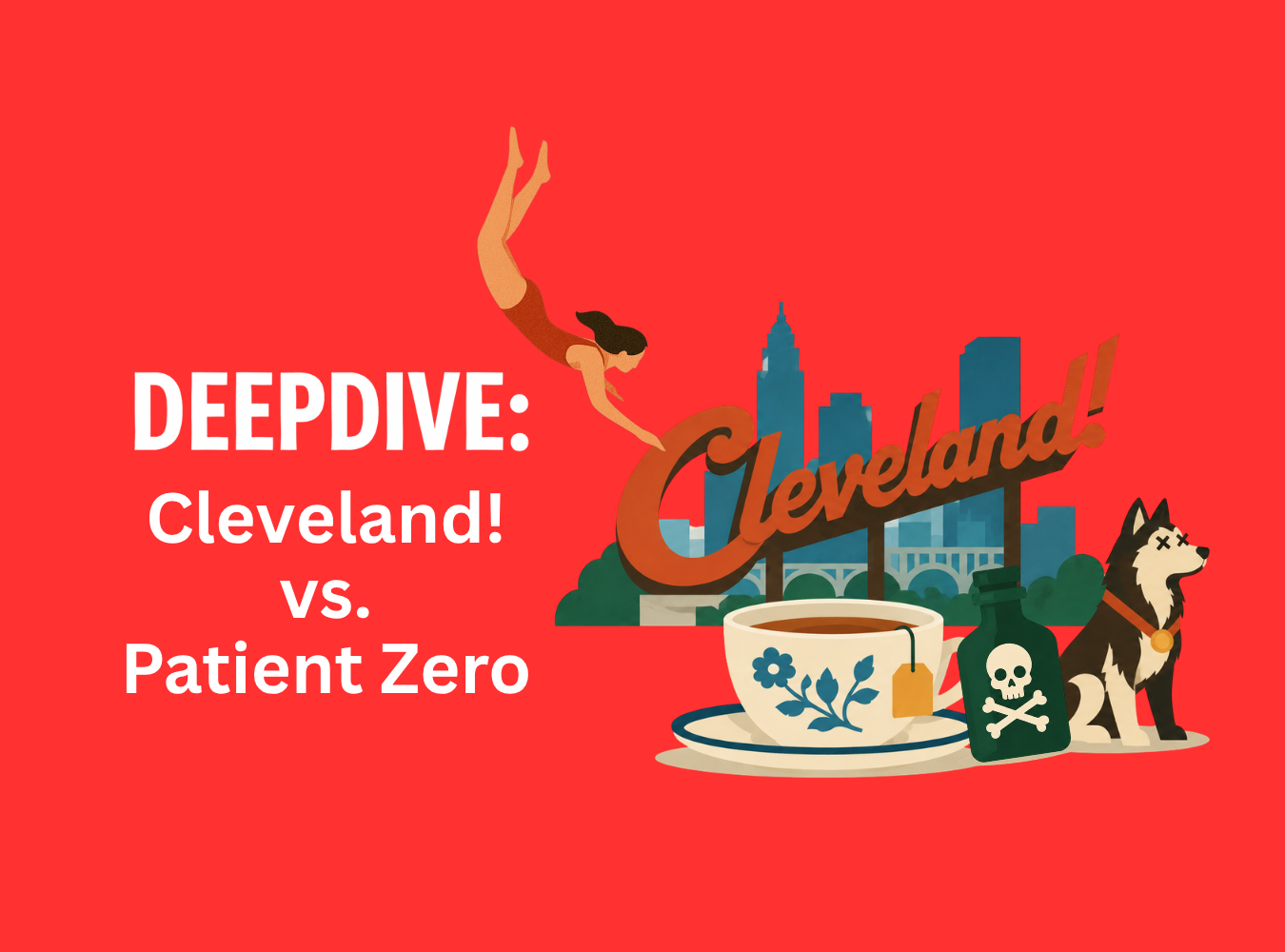
Taylor Swift released more than two new songs as part of The Life of a Showgirl: The Encore, but in the interest of not turning this into last week’s marathon of an article, we are sticking with two: “Patient Zero” and “Cleveland!”
They arrived from the same artist, in the same release window, with access to the same enormous cultural machinery. Social media still turned them into two very different things.
ListenFirst analysis of conversation across TikTok, Reddit, Instagram and Facebook found that “Patient Zero” captured 63.3% of the conversation surrounding the two songs, compared with 36.7% for “Cleveland!” That works out to 46,524 mentions for “Patient Zero” versus 27,012 for “Cleveland!”
If you stop there, the story is simple: “Patient Zero” generated more attention. But attention is only the first layer, and the more interesting difference is what audiences did with each song once they had it.
“Patient Zero” became something to investigate, decode, and interpret. “Cleveland!” became something to claim. That distinction shaped not only how much people talked, but where those conversations happened, what language surrounded them, and which communities found a reason to participate.
One song produced an interpretive ecosystem. The other plugged itself into an existing cultural identity. For marketers, that is considerably more useful than knowing which track finished first on the mention leaderboard.
What’s Happening?
“Patient Zero” Gave Fans Material to Work With
“Patient Zero” quickly became bigger than the song itself because the release gave audiences several different surfaces to inspect at once. Swift’s owned social performance shows how much interest clustered around the visual side of the release, with her post announcing the “Patient Zero” video generating nearly 2 million engagements and placing it among her highest-engagement posts during the period analyzed.
The surrounding conversation followed the same pattern. Terms including “music video,” “Dakota Johnson,” “Colin Farrell,” “frame” and “patient zero music video” trended alongside the track, showing audiences moving beyond basic reaction and into analysis.
That behavior is hardly foreign to Taylor Swift fandom. Her audience has spent years learning that a casting decision, prop, lyric, color choice or suspiciously placed object may be worth examining, and whether every detail actually contains a hidden message is almost beside the point. The possibility that it might is enough to generate participation.
The conversation also moved beyond the video itself. Terms including “toxic,” “narcissist,” “healing,” “survived” and “father figure” surfaced prominently, suggesting listeners were interpreting the relationships and emotional experiences described in the song and connecting them to a broader vocabulary around unhealthy dynamics, recovery and survival.
That gave “Patient Zero” several different entry points at once. Someone could discuss the music, inspect the video frame by frame, talk about the cast, interpret the lyrics or use its themes as a jumping-off point for their own experiences. Each behavior looks different on social, but all of them give the original release another path forward.
The platform distribution reinforces that read. TikTok and Reddit accounted for the vast majority of “Patient Zero” mentions in ListenFirst’s source analysis, a mix consistent with the analysis-heavy participation surrounding the track. Audiences did not simply have something to react to. They had something to work on.
“Cleveland!” Gave People Something to Claim
“Cleveland!” traveled differently because its strongest social hook was not interpretive density. It was identity, and the conversation moved outward from the song almost immediately.
Alongside Taylor Swift and Travis Kelce, trending terms included “Ohio,” “Browns,” “Cleveland Browns,” “Cleveland Guardians,” “Cleveland Cavaliers” and “Northeast Ohio.” Instead of pulling audiences deeper into the text of the song, “Cleveland!” connected itself to a place and the communities already attached to it.
If “Patient Zero” generated interpretation, “Cleveland!” generated identification. Clevelanders had a stake in it. Northeast Ohio had a stake in it. Browns, Guardians and Cavaliers fans had a stake in it. People already following the Swift-Kelce relationship had one too.
Crucially, none of those groups needed to begin from the position of being a Taylor Swift superfan. Sometimes the entire entry point was much simpler: that is my city, my team, my region, my cultural orbit.
The source mix reflected that shift. While “Patient Zero” conversation was concentrated on TikTok and Reddit, “Cleveland!” was overwhelmingly a TikTok and Facebook phenomenon. Rather than treating that as a simple distribution difference, it is more useful to look at the behavior underneath it. One conversation gave people more to interpret. The other gave people more ways to locate themselves inside the moment.
That made “Cleveland!” socially useful for reasons extending well beyond whether someone thought it was a good Taylor Swift song.
A Personal Note From Chase
My favorite Cleveland memory goes back to when I was itty bitty, and my dad took me to meet Balto at the Cleveland Museum of Natural History, the hero of my favorite movie at the time. Five-year-old Chase could not believe her hero had apparently been only two hours away this whole time, and I was ecstatic. I was going to pet him, throw the ball for him and, if things went particularly well, maybe convince him to come home with us. Who knows, right? I was five and had developed a fairly ambitious itinerary for this meeting.
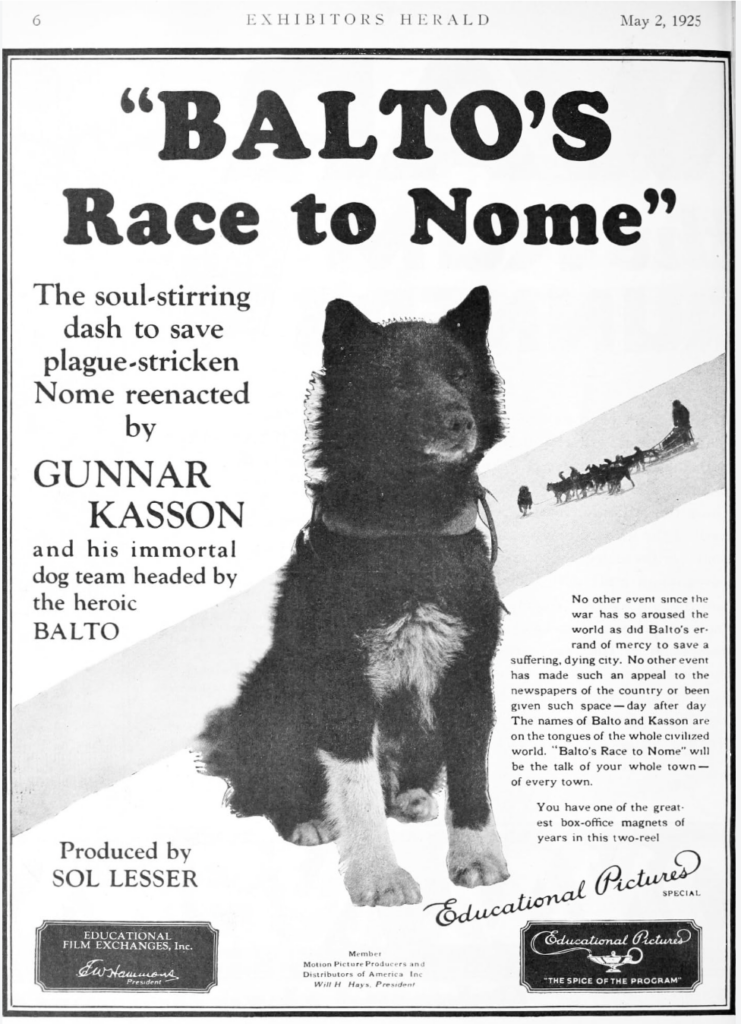
There was, of course, one small complication: Balto was dead. Baby Chase had a complete meltdown when she saw his frozen body behind plexiglass, while my dad stood there trying to figure out why this wholesome father-daughter outing had gone so catastrophically off the rails. He genuinely thought I knew Balto was dead. It simply had not occurred to him that, at five years old, I would have had literally no way of knowing that.

I am guessing the ride back to Columbus was incredible for him. Nothing like taking your daughter on what you think is a fun little day trip and accidentally introducing her to mortality through the taxidermied remains of her childhood hero.
Somehow, that has only made the memory more quintessentially Cleveland to me over time. I like the city, I have been there more times than I can count, and one of my favorite restaurants happens to be in the Flats. But even with all of that affection, there has never been a point in my life when I thought Cleveland needed, wanted, or particularly deserved its own Taylor Swift song.
And yet, everyone I know from Cleveland LOVES “Cleveland!,” which makes perfect sense because who the hell writes a song about Cleveland? We also cannot forget that the city already has a certified anthem in “Cleveland Rocks” from The Drew Carey Show, so there is precedent. Maybe love inspired Taylor. Maybe Drew Carey deserves all the credit. We may never know.
That combination of disbelief and hometown pride is exactly why the social response makes sense to me. For people from Cleveland and Northeast Ohio, the song does not have to be Taylor Swift’s most profound piece of writing or the most critically acclaimed track on the release. The fact that it exists is part of the appeal.
Cleveland does not spend much time being romanticized by global pop stars, so when Taylor Swift writes a song with the city’s name in the title, people are going to claim it. The reaction is not purely musical criticism. It is recognition, and there is real social value in someone with that much cultural weight suddenly pointing at your place on the map.
Sentiment Gets Messy Without Context
The sentiment breakdown makes the comparison more interesting because it does not behave the way a simple critical narrative might suggest. “Cleveland!” received some of the sharper reviews surrounding The Encore, while “Patient Zero” was treated more favorably by several critics, but the social conversation did not map neatly onto that divide.
Positive sentiment was remarkably similar. 9.3% of “Patient Zero” conversation was classified as positive, compared with 8.9% for “Cleveland!” Negative sentiment was not nearly as close, with 8.7% of “Patient Zero” conversation classified as negative compared with just 2.7% of conversation around “Cleveland!”
At first glance, that could make “Patient Zero” look like the more negatively received song. The topic data complicates that interpretation because terms such as “toxic” and “narcissist” can push sentiment negative even when people are discussing the subject matter of the song rather than expressing dislike for the song itself.
That distinction matters far beyond Taylor Swift. A dashboard can tell you that the language surrounding a piece of content is negative, but it cannot always tell you what that negativity is directed toward. Emotional intensity, thematic discussion, criticism and outright rejection can all wind up looking much more similar in a top-line sentiment score than they actually are.
For marketers, sentiment becomes much more useful when it is paired with topic, source and context. Otherwise, the measurement can be technically correct while the interpretation is strategically wrong.
Brand and Marketer Implications: Participation Has Different Architectures
The obvious reading of this comparison is that “Patient Zero” performed better because it generated more conversation. That is technically true, but it misses the more useful distinction between attention volume and participation structure.
“Patient Zero” created interpretive participation. It gave audiences enough material to analyze, reshape and discuss, which meant the content could keep generating new content around itself.
“Cleveland!” created identity participation. Its value came from attaching itself to communities, places and affiliations that already existed, allowing people to participate because they recognized themselves somewhere inside the conversation.
Those behaviors may land in the same engagement dashboard, but they are not interchangeable. Someone building a theory around a music video is engaging for a different reason than someone posting because their hometown suddenly appeared in a Taylor Swift song. One behavior is driven by interpretation. The other is driven by recognition, affiliation and belonging.
That distinction becomes particularly important when marketers try to recreate successful content. We have a habit of copying the visible form of performance instead of identifying the reason the audience cared in the first place.
The lesson from “Patient Zero” is not simply that a highly produced music video creates conversation. The more useful lesson is that the release contained enough unresolved material for audiences to feel like there was something left for them to do.
The lesson from “Cleveland!” is not simply that local references perform well. The song gave an existing community cultural recognition and an extremely low-friction way to join the moment.
Those are different mechanisms, and confusing them is how brands end up recreating the costume of a cultural moment without understanding why anyone showed up for the original.
Platform POV: Ask What the Audience Is Doing There
The platform mix offers another layer of context. TikTok and Reddit dominated the “Patient Zero” conversation, while TikTok and Facebook were much more prominent around “Cleveland!”
The useful question is not whether one platform is inherently better for analysis and another inherently better for identity. The useful question is what kind of audience behavior was showing up on each platform around these particular songs.
For “Patient Zero,” the conversation was dense with interpretation, video analysis and emotionally loaded themes. For “Cleveland!,” the conversation moved through place, sports fandom, regional identity and an already enormous celebrity relationship narrative.
That should change how marketers read platform performance. “Where is this performing?” is only half the question. The other half is what are audiences using it to do once they get there?
A high-performing piece of content might be giving people material to analyze. It might give them a way to signal identity, tell a personal story, make a joke, join an argument or show affiliation with a community. Those motives are much closer to the actual distribution system than the engagement total sitting at the top of the dashboard.
Algorithms can amplify those behaviors, but they cannot create the reason for participation from nothing.
Engagement Is Not the Same as Permission
There is another tension underneath both songs that matters for brands. Participation tells you that people found a reason to engage with a piece of content. It does not mean every creator or institution can reproduce the same move and expect the same response.
Taylor Swift can release a song called “Cleveland!” and immediately activate conversation around a city because she brings an extraordinary amount of institutional and cultural weight into the moment. The Swift-Kelce connection gives the reference another layer of relevance before the first fan posts anything.
A brand cannot assume it inherits that same permission simply by naming a city, referencing a team, or borrowing a community’s language. The visible mechanics are easy to imitate. The relationship that makes those mechanics feel legitimate is much harder to manufacture.
That is where long-term brand equity matters. If audiences understand why you are in a conversation, participation can compound. If they do not, cultural fluency starts looking a lot like costume jewelry.
The goal is not to chase every behavior that performs. It is to understand which forms of participation you actually have permission to invite.
Key Takeaways for Marketers
- Look past volume to participation. “Patient Zero” generated more conversation, but the more useful question is what audiences were doing with each song once they encountered it.
- Interpretation and identification are different behaviors. One gives audiences material to work on. The other gives them a reason to see themselves inside the moment.
- Platform mix adds context, not an automatic explanation. TikTok and Reddit dominated one conversation while TikTok and Facebook dominated the other, but the audience behavior surrounding those conversations is what makes the split meaningful.
- Sentiment needs topic context. Negative language can describe the subject being discussed rather than dissatisfaction with the content itself.
- Visible mechanics are not transferable permission. A cultural move that works for Taylor Swift does not automatically work for a brand simply because the format can be copied.
- Ask what audiences are using the content to do. That question gets much closer to why something moved than an engagement total ever will.
Final Thought
Taylor Swift released these songs into the same cultural ecosystem, but audiences did not leave them intact. “Patient Zero” became an interpretive object, something to inspect, decode and connect to personal experience, while “Cleveland!” became a cultural identifier that a city, sports culture and adjacent celebrity narrative could claim.
That transformation is where social performance gets more complicated and much more useful. Marketers spend enormous amounts of time shaping what a piece of content is supposed to mean, then measuring what happened after publication as though the meaning remained fixed.
It rarely does.
Once content enters social, audiences begin deciding what it is for, which communities it belongs to and whether it has enough utility, identity or emotional material to keep moving. The uncomfortable part for brands is that some of the most valuable social performance begins precisely when that control starts to disappear.
Understanding attention means understanding what people did with the thing after it stopped being entirely yours.