Last year’s viral holiday aesthetic is returning for 2026, with Pinterest driving a new wave of inspiration.
Last Christmas, TikTok fell in love with tartan plaid, velvet ribbons, antique brass, and the nostalgic luxury of a Ralph Lauren holiday campaign. The aesthetic quickly became one of the season’s defining decorating trends, inspiring creators to transform their homes into something resembling a cozy East Coast country estate.
When ListenFirst first covered the Ralph Lauren Christmas phenomenon in October 2025, the conversation centered on a viral aesthetic that offered consumers an escape into traditional holiday glamour.
A year later, the look is back. And the data suggests it’s finding staying power.
Pinterest Is Giving Ralph Lauren Christmas a Second Season
According to ListenFirst’s analysis of YouScan social conversation, Pinterest mentions related to Ralph Lauren Christmas have more than doubled year over year, climbing from approximately 17,000 in fall 2025 to more than 38,000 during the corresponding period in 2026.
Pinterest now represents roughly 90% of the tracked conversation, compared with approximately two-thirds last year. Meanwhile, TikTok mentions have declined, suggesting an interesting shift in where the aesthetic is finding traction.
In 2025, TikTok helped turn Ralph Lauren Christmas into a viral cultural moment. In 2026, Pinterest is emerging as its primary destination for decorating inspiration. The distinction matters. TikTok excels at introducing audiences to aesthetics through entertainment and discovery. Pinterest offers a place to collect ideas, explore variations, and plan how to recreate them.
That shift suggests Ralph Lauren Christmas may be transitioning from a seasonal viral moment into an aesthetic people return to year after year.
The Look Is Becoming More Defined
The conversation is evolving, too.
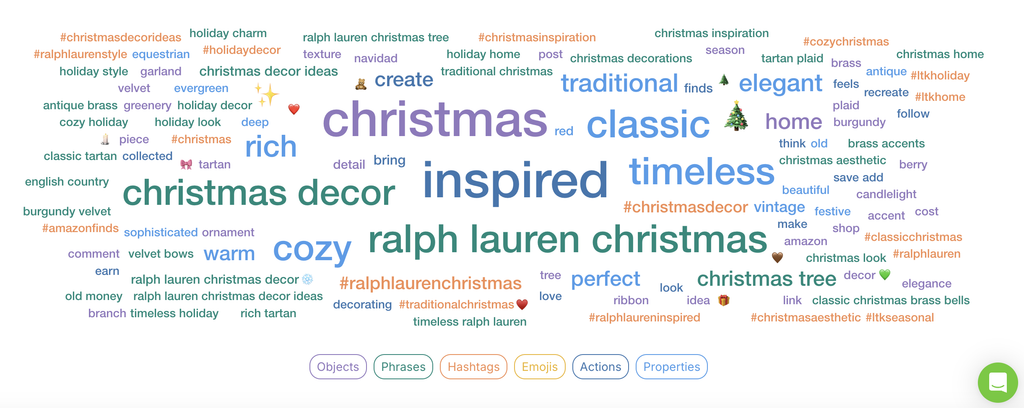
In 2025, prominent language centered heavily on the Ralph Lauren Christmas name and its associated aesthetic. While those references remain important, the 2026 conversation places greater emphasis on words like “inspired,” “timeless,” “classic,” “traditional,” and “elegant.”
More specific decorating language is also emerging, including burgundy velvet, antique brass, tartan plaid, evergreen, and English country.
These details were already part of the aesthetic in 2025, but their prominence in this year’s conversation suggests creators are increasingly articulating the ingredients that make the look recognizable. Shopping and recreation terms, including “Amazon finds,” “recreate,” and “Christmas decor ideas,” reinforce the appeal of making the Ralph Lauren aesthetic accessible beyond the luxury brand’s own products.
Why It Matters for Brands
Ralph Lauren Christmas offers an interesting example of what happens when a brand’s visual identity becomes part of the cultural vocabulary. People can recognize the aesthetic without seeing a Ralph Lauren product. A plaid ribbon, brass candlestick, or richly decorated Christmas tree can evoke the brand’s entire holiday world.
That’s a level of brand recognition worth paying attention to: when a brand’s name becomes shorthand for a recognizable feeling, style, or experience.
Of course, Ralph Lauren has spent decades building that identity. But brands don’t necessarily need generations of heritage to develop their own recognizable cultural shorthand.
Consider Glossier’s signature pink bubble-wrap pouches, which became recognizable even without a logo. Or Target, where the simple act of making a “Target run” has become its own social media ritual, complete with shopping hauls, product discoveries, and dedicated creator communities. More recently, Rhode’s viral lip-treatment phone case became such a distinctive accessory that other beauty brands began creating their own variations.
Personal Note: Blue Target
My 3-year-old loves Target. What kid wouldn’t? The overstimulating red, the massive toy aisle, cake pops right by the front door. What’s not to love?
But for a little while, my daughter refused to go anywhere that wasn’t Target. Instead, she’d ask to go to “Blue Target” or “Orange Target.” Eventually, we realized that Blue Target could mean Walmart, Kroger, or Lowe’s. Orange Target was Home Depot (which, incidentally, is also where Minnie Mouse lives during Christmas).
Obviously, my 3-year-old doesn’t understand the concept of a brand “owning” an aesthetic. She just knows she prefers Target. And somewhere along the way, Target became her reference point for every other store. In her mind, they’re all just different-colored versions of Target. Similar to how we say “Google it,” despite Bing trying to make “Bing it” a thing (it’s not a thing).
But whenever we pass the OG Target, she proudly announces that she’s found “Red Target.” Apparently, if you’re going to compete with the original, you’d better bring the heat.
Final Thought
Whether it’s a “Target run,” a Rhode phone case, or a Christmas tree dressed in tartan and velvet, brands become part of our cultural vocabulary when consumers start using their identities as shorthand. The lesson for marketers? Give people something recognizable enough to remember and interesting enough to make their own. That might be a signature color, a distinctive product, or an experience people want to repeat. Consistency builds the association, but consumer participation is what gives it a life beyond the brand.
Ralph Lauren Christmas shows how powerful that can become. The brand established the visual language, and consumers are now carrying it forward through their own decorating ideas, shopping lists, and holiday traditions. Its renewed momentum in 2026 suggests that last year’s viral aesthetic may be developing into something with real staying power.
TikTok helped make Ralph Lauren Christmas famous. Pinterest may be helping make it a tradition.