

Emotional Risk Economies Universe: Part 1: Trust Economy || Part 2: Alignment || Part 3: Prestige
Over the next four weeks, we are digging into the four Emotional Risk Economies that actually determine how far a brand can go on social media: Trust, Alignment, Prestige, and Escape.
Platforms may flatten everyone into the same feed, but they do not flatten consequences. A snack brand, a fertility clinic, a luxury hotel, and a sustainability startup are not operating with the same emotional margin for error, even if the algorithm treats them like they are.
This series unpacks the unspoken rules inside each category, where tone becomes risk, engagement gets confused with permission, and cultural volatility can quietly erode long-term equity. If you’ve ever felt the tension between what performs and what feels right, this framework is for you.
This week, we are starting with the Trust Economy. A group of brands that live where vulnerability and responsibility meet, with high stakes and very little margin for misinterpretation.
The Trust Economy and the Cost of Getting Cute
Social platforms reward brands that behave as though they have nothing to lose. The faster the response, the sharper the joke, the more culturally fluent the tone, the more likely the algorithm is to amplify it. Over the past several years, this incentive structure has pushed brands toward a shared performance style built on irreverence, speed, and self-awareness. In low-stakes categories, that shift has largely worked. In high-empathy industries, it creates friction that is harder to see and harder to reverse.
This is the first fracture in the Emotional Risk Economies framework. Platforms incentivize similar behavior across categories, but audiences do not grant equal emotional permission to every brand. In maternal care, pediatric health, insurance protection, financial distress services, or end-of-life planning, the primary asset is not engagement. It is psychological safety. When brands in these spaces borrow tone from entertainment or lifestyle categories, the risk is not simply backlash. It is destabilization of trust.
The industries that live inside the Trust Economy are broader than many marketers realize. Maternal and infant care brands. Healthcare. Fertility clinics and IVF services. Mental health providers. Oncology centers. Insurance companies. Debt relief services. Estate planning firms. Funeral homes. Pet care. In each case, the audience relationship is anchored in vulnerability. These brands show up in moments defined by uncertainty, fear, responsibility, or irreversible decisions. The emotional stakes are not theoretical. They are lived.
What’s Happening?
A recent example makes this margin visible. The renewed controversy around Frida Baby’s marketing illustrates just how thin it is and how, despite social moving at warp speed, it never truly forgets.
The brand built its identity around candor. It rejected the pastel, sanitized aesthetic of traditional baby marketing and replaced it with humor that acknowledged the physical and emotional realities of parenting. But the humor was also cheeky, a bit sexually charged in a space where that had rarely had a place. That tension was part of the differentiation. On store shelves filled with soft typography and euphemism, Frida Baby stood out. Its product line stretched from the delivery room to the nursery and beyond, collapsing stages of care that were historically marketed separately and more discreetly.
The bigger issue was not just packaging. It was the resurfacing. Screenshots of older social posts began circulating alongside product images, and TikTok and Instagram users stitched, reposted, and reframed the content in a new cultural moment. What may have been brushed off or defended at the time of release was now being re-evaluated collectively and at scale.
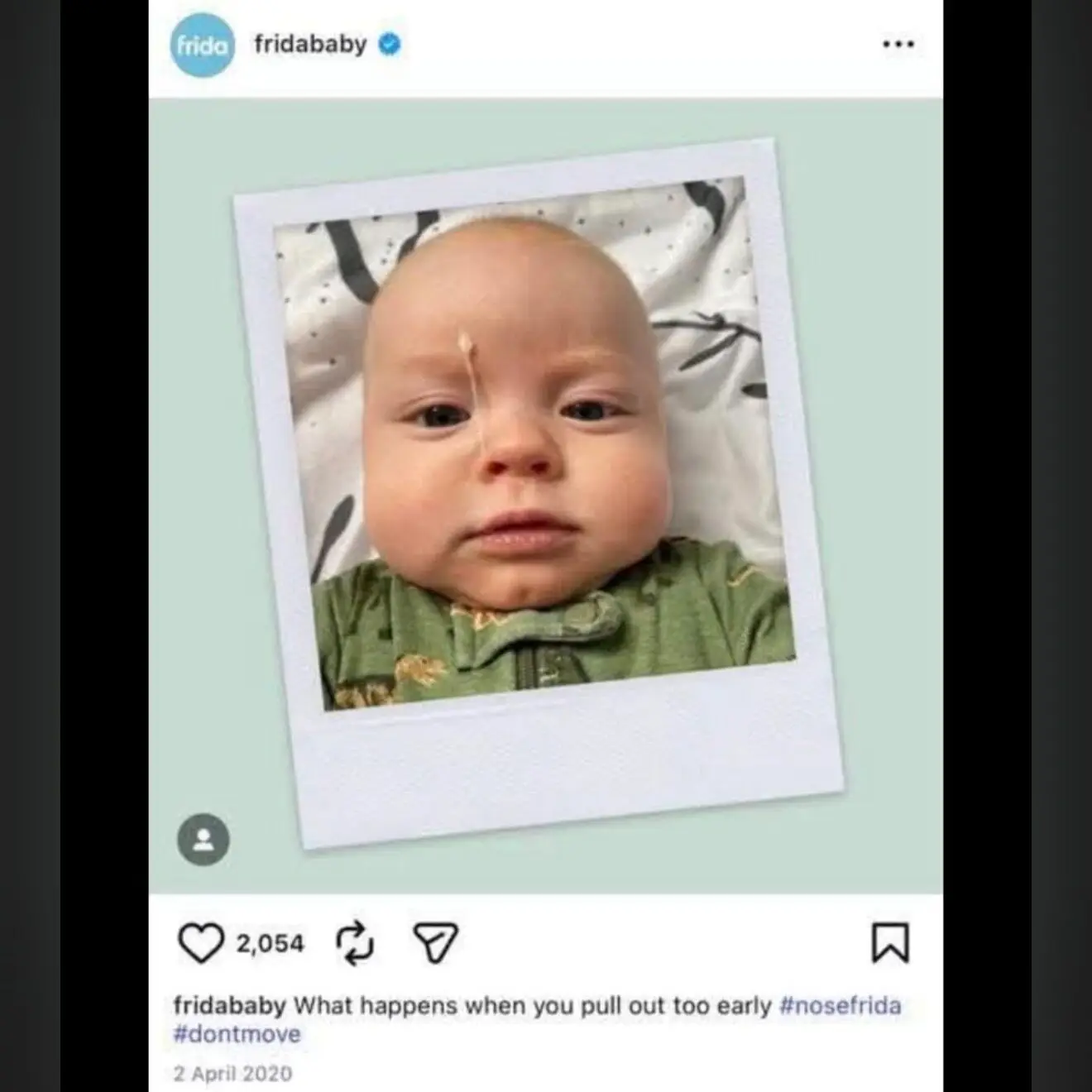
Many parents argued that the tone went too far. Not because the copy had changed, but because the lens had. In a media climate shaped by renewed public attention to child exploitation cases and the release of high-profile Epstein-related court documents, conversations about the proximity of adult-coded humor to children intensified. Parents on TikTok explicitly referenced that context, with even Frida Baby supporters arguing that marketing language once dismissed as “cheeky” now felt “gross” when placed near infant products.
Frida Baby defended the tone as adult-facing humor meant to lighten the load for caregivers. The debate was less about whether the brand had always been provocative and more about whether provocation ages well in a high-empathy category. Social media may operate in cycles measured in hours, but screenshots operate on a different timeline. They wait for context to change.
That is the structural reality of the Trust Economy. You are not just publishing into today’s feed. You are publishing into tomorrow’s reinterpretation.
Platform Incentives vs. Emotional Contracts
The broader issue extends beyond one brand. Platform logic does not adjust for emotional stakes. TikTok does not distinguish between a pediatric therapy provider and a gaming console when rewarding trending audio. Instagram Reels does not account for the weight of oncology care when privileging relatability. The cultural center of gravity has shifted toward Escape behavior, where irreverence and speed are often mistaken for relevance. But in Trust categories, sounding less institutional can erode the steadiness that signals competence.
This is where leadership teams often miscalculate. Influencers can provoke because their risk is personal. Brands endorse, and endorsement carries institutional weight. A creator flirting with taboo humor reads as individual expression. A caregiving brand doing the same reads as organizational judgment. The asymmetry is subtle but consequential, particularly in categories where audiences are already operating in protective mode.
The Quiet Risk: Tonal Drift
The loud controversy draws headlines. The quieter risk is tonal drift. When fertility clinics adopt the cadence of DTC beauty brands, or pediatric companies lean heavily into meme culture, nothing necessarily implodes. Engagement may climb. Comments may increase. But authority flattens. Over time, the brand begins to feel less like an anchor and more like another participant in the same cultural churn.
High-empathy industries share structural conditions that amplify this risk. Their audiences are in protective mode. The emotional stakes are high, and the consequences feel irreversible. There is low tolerance for sexual ambiguity, low tolerance for sarcasm toward concern, and heightened sensitivity to reinterpretation. A joke that ages poorly in a snack brand campaign feels awkward. In a caregiving context, it can feel unsafe.
Competing for Permanence
Platform incentives are not going to recalibrate for high-empathy categories. Speed and irreverence will continue to drive visibility, and brands that resemble creators will often win the week.
But high-empathy categories are not competing for the week. They are competing for permanence.
In the Trust Economy, the cost of misalignment is not just backlash. It is doubt. And doubt in caregiving, protection, or health does not behave like doubt in fashion or snacks. It lingers. It reframes past decisions. It alters future consideration.
The deeper signal here is not about humor. It is about emotional risk environments. Brands often believe platforms define the rules of engagement. In reality, emotional context does. And emotional context can shift overnight. When the cultural lens tightens around fragility, reinterpretation risk expands. Screenshots resurface. Old tone gets re-audited. What once differentiated can begin to destabilize.
The Trust Economy forces a harder question than “Will this perform?” It asks whether, if the lens changes, this will still feel safe. Social may move at warp speed, but trust moves slowly and breaks even slower.
Personal Note: I Bet You’re Fun at Parties
Earlier this week, I saw a baby brand publish a satirical video set in a labor and delivery ward. A woman is preparing to give birth. Her husband walks in and says, “Just to be clear, you’re not going to make dinner tonight, right?” It was clearly meant to be a commentary on domestic imbalance. A wink. A knowing nudge.

I left a comment saying that while satire has its place, that kind of humor lands differently when it comes directly from a baby brand’s account. I wasn’t looking to argue. Just adding to the conversation.
Less than an hour later, the original creator entered the brand’s comment section and replied to me: “I bet you’re fun at parties.” Not the worst thing anyone has ever said on the internet. Hell, not the worst thing said to me on the internet. But it shifted the tone. What had been a conversation about whether the video was funny or appropriate for the category became an attempt to make the critic the punchline, and in this case, it fell flat.
Then more comments came in. Several people echoed the same sentiment I had shared. Many had “Doula” or other birth-related credentials in their bios. Women who live in labor and delivery rooms for a living. I started an internal countdown to how long it would take for the thread to disappear. It took about 18 hours.
If I had been running the community management, I likely would have removed it too. Once the creator’s retort became the screenshot, the brand owned that energy whether it meant to or not. The longer it stayed up, the more the comment section framed the brand as dismissive.
There is a broader operational lesson here as well. When brands license creator content, they are not just approving a video. They are attaching their name to a person’s instincts in real time. And unless expectations are clearly set, you are effectively outsourcing tone in the most volatile part of the experience: the comment section.
I doubt most brands explicitly tell micro-influencers they have permission to spar with commenters. But I also doubt most brands explicitly tell them not to. In high-empathy categories, that gray area becomes risk. If you have not defined how criticism should be handled, when to escalate, and what tone is off-limits, you should assume the default will be whatever the creator would do on their own account. Especially when you tag the original creator in the caption (as you should).
And once it is on your account, it is no longer theirs.
That is the operational reality of the Trust Economy. Once you publish it, you own the tone and the fallout.
Baby brands operate in a space defined by physical and emotional vulnerability. They speak to women in some of the most intense seasons of their lives. The emotional context is different. The expectations are higher.
Two days later, the renewed Frida Baby controversy broke. Screenshots resurfaced. Old tone was re-audited through a new cultural lens. The timing felt almost ironic. A small comment section flare-up had turned into a full-scale case study in reinterpretation risk.
Becoming a parent has shifted how I interpret marketing language tied to caregiving and child safety. I know that is a bias. But bias is not always distortion. Sometimes it is recalibrated risk perception. When you are responsible for something fragile, ambiguity reads differently. What once felt clever can feel misaligned, not because it is scandalous, but because the margin for misunderstanding feels too small.
Eliminating bias is neither realistic nor desirable. Understanding it is strategic. If something feels off in a caregiving category, dismissing that discomfort as a lack of edginess may mean ignoring a signal. The more concerning failure mode is not edgy humor itself, but internal hesitation being overridden in pursuit of relevance.
Case Study: Financial Institutions and the Empathy Gap
Parenting brands are not the only ones operating inside the Trust Economy. Financial institutions do as well, particularly when their audience is navigating instability, debt, or economic pressure.

In 2019, Chase (the bank, not me) posted a tweet using the hashtag #MondayMotivation that featured a fictional exchange between a person and their bank account. The customer wonders why their balance is so low. The bank account responds with lines like “make coffee at home,” “eat the food that’s already in the fridge,” and “you don’t need a cab, it’s only three blocks.” The punchline implied that everyday spending habits were the culprit.
The backlash was immediate. Many users interpreted the tweet as a bank blaming customers for financial struggles while operating within a broader system that contributes to economic inequality. Senator Elizabeth Warren publicly criticized the post, mimicking the format to highlight structural factors beyond individual control. What was intended as relatable motivation was received as tone-deaf shaming.
Context amplified the reaction.
By April 2019, public trust in large financial institutions was already fragile. The Wells Fargo fake accounts scandal broke in 2016, followed by years of congressional hearings, leadership resignations, regulatory fines, and even an unprecedented Federal Reserve asset cap in 2018. The narrative was still fresh: banks exploit customers, banks profit off fees, and banks lack accountability.
At the same time, economic inequality dominated cultural conversation. Student debt discourse was intensifying. Housing affordability was a flashpoint. The “avocado toast” trope had already become shorthand for dismissive, out-of-touch financial advice aimed at younger generations. The 2020 presidential primary cycle was ramping up, with consumer protection and corporate accountability central themes.
Elizabeth Warren was actively campaigning on banking regulation and Wall Street reform when she responded to the tweet, amplifying it beyond typical Twitter backlash and into a national political narrative about institutional responsibility.
Add to that the lingering resentment from the 2008 financial crisis — bailout memory, foreclosure trauma, fee fatigue — and the emotional climate becomes clearer. Trust had not fully rebuilt. When a major bank posted what read like budgeting discipline dressed up as humor, it did not land as playful. It landed as institutional lecturing.
Even if the copy was intended as light financial advice, it was published into an environment primed for distrust. That is Trust Economy volatility.
The issue was not financial advice. It was positioning.
For many young people, banks exist primarily in moments of stress. Overdraft fees. Credit card debt. Mortgage payments they’ll never get to make compared to the rising rent payments they can’t escape. For many customers, checking their balance is not a casual act. It is a source of anxiety. When an institution that holds your money adopts a sarcastic or dismissive tone, the emotional mismatch is amplified.
This is a different flavor of the same risk we see in caregiving categories. The audience is not looking for banter. They are looking for stability. In high-empathy financial contexts, humor that punches down, even unintentionally, erodes institutional credibility.
The Chase example demonstrates that even trend participation with a popular hashtag can misfire when the emotional environment is misread. The platform rewarded relatability. The audience demanded accountability. And brands inherit the full weight of the interpretation.
How Trust Brands Protect Themselves
If the Trust Economy raises the emotional stakes, it also demands different operating discipline. The goal is not to eliminate personality. It is to design tone that can withstand reinterpretation.
- Define your emotional risk profile. Are you showing up in moments of stress, grief, protection, or irreversible decision-making? If so, your margin for ambiguity is smaller than the platform would suggest.
- Separate engagement strategy from brand permission. Just because a format performs does not mean your category has clearance to use it. Trend adoption should pass a simple filter: does this reinforce steadiness, or does it borrow energy from categories that trade on chaos?
- Codify creator expectations. If you license influencer content, document how to handle criticism, when to escalate, and which tone is unacceptable. Comment sections are not peripheral. In high-empathy categories, they are part of the brand experience.
- Build a reinterpretation audit into your approval process. Before publishing, ask how this would read if screenshotted six months from now in a different cultural climate. If the answer is uncertain, that uncertainty is signal.
- Protect internal hesitation. If someone in the room says “this feels off,” especially in caregiving or protection categories, slow down. In the Trust Economy, instinct often mirrors audience fragility.
Key Takeaways for Marketers
- Not all engagement is permission.
- Emotional environment outweighs platform incentive.
- Institutional weight changes how humor is received.
- Cultural context amplifies interpretation.
- Reinterpretation risk compounds over time.
- In high-empathy categories, steadiness is strategy.
In categories built on protection and care, that distinction is everything.
A Final Thought
What happens when platforms reward performance, but your audience needs protection? The Trust Economy does not reject culture. It simply asks a different question of it.
Not “Is this clever?”
But “Is this steady?”
In high-empathy categories, relevance is not about being the loudest voice in the feed. It is about being the safest place in the room. That does not always trend. It does not always go viral. But when vulnerability is the backdrop, steadiness is not boring.
It is the brand.