Instagram’s discovery model is changing fast, and brands still optimizing for yesterday’s feed are already behind. Get the full breakdown on what reach, relevance, SEO, and content performance actually mean in 2026.
Download your copy below and check out the deep dive for even more details about what you can implement today to stop the scroll tomorrow.
Instagram is no longer one channel. It is several behavior systems wearing the same app icon.
Instagram has always been restless, but 2026 is making one thing painfully clear for brands: the old playbook is too blunt for the platform Instagram has become. For years, Instagram strategy was built around a tidy set of assumptions: grow the follower base, post consistently, track likes, watch views, add hashtags, and wait for discovery to do its job.
That version of Instagram is gone. The clearest recent signal came on June 10, 2026, when Instagram brought “Your Algorithm” into the main feed, allowing users to see and adjust the topics the platform thinks they are interested in. (Threads)
This is not a small product tweak. It is Instagram moving discovery logic closer to the center of the app, while giving users more explicit control over what relevance means to them.
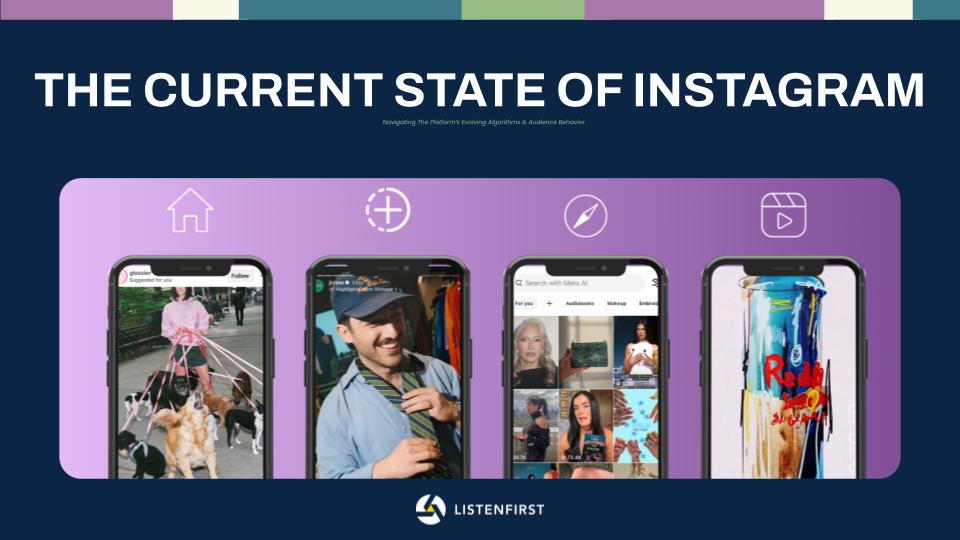
The platform now behaves less like a single social feed and more like a set of connected distribution environments, where Home, Reels, Explore, Search, and Stories each reward different behaviors, formats, and audience signals. Treating Instagram as one uniform channel is how brands end up mistaking activity for strategy.
The better question is no longer, “What should we post on Instagram?” It is, “Which surface are we building for, and what behavior are we trying to earn?”
What’s Happening?
Instagram does not have one algorithm
The most important thing for brands to understand is also the thing many content calendars still ignore: Instagram does not run on one universal algorithm. Home is still shaped by relationships, follows, and user interest, while Reels is built for entertainment and discovery.
Explore and Search are increasingly organized around intent, which means they reward content that is legible to both the platform and the audience. Stories remain the closer, more habitual space where existing audiences expect updates, personality, and proximity.
That means one creative idea will not travel evenly across the app. A polished product announcement might work in Stories because the audience already has context, but the same asset can vanish in Reels if it lacks a hook, pacing, or entertainment value.
A carousel might perform well in Home because it earns saves and shares. To work harder in Search or Explore, it also needs clear keywords, visual utility, and a reason for Instagram to understand who should see it next.
The operational shift is simple, but not easy: brands need surface-specific Instagram strategies. Not more decks, not more recycled creative, and definitely not one master post resized into five placements.
Performance is getting more volatile
Instagram performance has become harder to predict across categories. Brands are seeing more inconsistency in fan growth, response rate, and average engagement, with some months looking healthy and others looking like the platform quietly moved the furniture overnight.
That volatility is not just a brand problem. It reflects the platform’s larger direction, as Instagram puts more weight on relevance, retention, and interest-based distribution while organic visibility gets squeezed by content saturation, creator competition, paid media, and in-app commerce.
A format that worked six months ago is not entitled to work now. A cadence that looked smart last quarter may read as noise this quarter, which makes historical benchmarks useful but dangerous when they become religion.
Instagram is not necessarily becoming less valuable. It is becoming less forgiving, which means performance strategy has to get more precise instead of simply getting louder.
Brand and Marketer Implications
The metrics that matter have changed
Likes still matter, and follower count still has a role. But both are increasingly weak proxies for actual audience permission.
A like is easy. A follow can be stale. A large audience can be mostly inactive, and none of those signals alone prove that people care enough to carry the content forward.
The stronger signals now are the ones that show intent:
- Shares
- Saves
- Reach
- Watch time
- Retention rate
- Shares per reach
- Saves per reach
These metrics tell brands whether content is doing something more valuable than being glanced at. Shares mean the post created enough identity, utility, humor, tension, or relevance for someone to send it to another person.
Saves mean the content has future value. Reach shows whether Instagram is expanding distribution beyond the existing base, while retention reveals whether a video can survive the scroll.
The sharper performance question is not, “How many engagements did this get?” It is, “Of the people who saw this, how many found it useful, entertaining, or meaningful enough to act?”
That is a higher bar, which is exactly why it is more useful. It separates passive reaction from actual audience behavior.
Reach depends on purpose, not volume
Consistency still matters on Instagram, but volume alone is not a reach strategy. Across major industries, brands averaged roughly five to seven posts per week in 2026, though frequency varies significantly by category.
Sports and entertainment brands can often post more because their content is tied to live moments, fandom, and cultural conversation. Other categories do not need to chase that pace to perform well.
The bigger point is that posting more does not automatically create more reach. Instagram’s surfaces are too distinct for that, and each surface is shaped by different user intent.
A higher cadence can help when content is timely, relevant, and matched to audience behavior. It can also dilute performance when it is just a calendar trying to justify itself.
Every post needs a job. Discovery, community maintenance, product education, entertainment, search capture, real-time participation, and brand world-building all require different creative choices.
A strong Instagram strategy does not fill slots. It assigns purpose, then measures whether the content actually earned the behavior it was built to create.
Carousels and video are carrying more of the load
Carousels are having a strong 2026, with video close behind. Static image posts still have a role, but carousels and videos are doing more of the heavy lifting when it comes to meaningful engagement.
Carousels work because they slow people down. They invite swiping, sequencing, explanation, and utility, which gives audiences more than one chance to find value in the post.
They also have a distribution advantage. Instagram can resurface a carousel from the first unseen slide, giving the post another opportunity to earn attention instead of treating the first impression as the only one that matters.
Video remains essential, especially through Reels, but video performance is increasingly dependent on retention. Short-form content has to make its value clear quickly because the first few seconds are not a warm-up, they are the audition.
This does not mean every brand should become a video factory or turn every thought into a carousel. It means format choice needs to be tied to behavior, because some ideas need motion, some need structure, and some need one image with enough restraint to let the point land.
The mistake is treating format as a trend instead of a strategic container. The better move is to understand what each format allows the audience to do.
Instagram SEO is now part of the job
Hashtags are no longer the discovery machine brands once treated them as. Instagram is becoming more search-oriented, especially through Explore and Search, where users increasingly look for ideas, products, places, routines, aesthetics, communities, and recommendations.
The “Your Algorithm” expansion makes that shift harder to ignore. If users can actively adjust the topics they want to see in the main feed, brands are no longer optimizing only for what Instagram infers from passive behavior. (The Verge)
They are also competing inside a more explicit interest system. Topic relevance, searchable language, and content clarity become more important when users have more control over the categories of content they want Instagram to keep showing them.
That makes keywords more than a caption detail. They are infrastructure, and brands need to treat them as part of how content gets understood, categorized, and distributed.
Brands should be intentional about keywords in captions, on-screen text, alt text, and closed captions. The goal is not to stuff content with generic category language, but to help Instagram understand what the content is about and who is likely to care.
The best keyword strategies reflect how people actually search, describe themselves, and frame their needs. A beauty brand should not only optimize around product type, because audiences are also searching through skin concerns, ingredients, routines, occasions, aesthetics, and the emotional language of trying to solve something.
Hashtags can still play a role, but it is a smaller and more disciplined one. Searchable language is now the stronger lever because it aligns content with audience intent, not just topical labeling.
Platform and Cultural POV
Instagram is turning relevance into a user-controlled system
For years, platforms trained marketers to think about relevance as something inferred by the machine. Users watched, liked, skipped, searched, saved, and shared, while the algorithm interpreted those signals and decided what to distribute next.
Instagram’s latest move complicates that model. By bringing “Your Algorithm” into the main feed, Instagram is making relevance more visible and more adjustable, beginning with topic-level controls and signaling a broader shift toward user influence over recommendations. (The Verge)
For marketers, that changes the stakes. Content has to be legible enough for the platform to categorize, specific enough for users to recognize as aligned with their interests, and valuable enough to survive once people have more control over the topics they see.
This is why SEO, retention, saves, shares, and topic clarity now sit in the same strategic conversation. Discovery is not just about getting pulled into a feed, because it is increasingly about proving that the content belongs in the interest graph the user is actively shaping.
The algorithm rewards behavior. Audiences reward point of view.
Brands love to talk about “the algorithm” as if it is a moody executive with a corner office. In practice, Instagram is rewarding patterns of audience behavior, especially signals that suggest a post is relevant enough to keep moving.
Trending audio can help connect content to broader interest signals, and audio now extends beyond video into carousels and image posts. Fast-paced video still matters, especially in Reels, where content has to get to the point quickly, hold attention, and feel native to the surface.
Originality matters too. Content that feels recycled, overly promotional, watermarked, low quality, or disconnected from recommendation guidelines has a harder road.
But the real differentiator is not vague “authenticity.” That word has been sanded down by years of brand decks, and it is not specific enough to guide creative decisions.
What matters is recognizable point of view. A brand needs a voice, visual system, rhythm, and content world that audiences can identify, even when the logo is not doing all the work.
Not every post needs to be loud. Not every post needs to be funny, but the presence has to feel distinct enough that people understand why it belongs in their feed.
The algorithm can distribute content. It cannot make people care, and that distinction is where too many brands lose the plot.
Collaboration can amplify a good idea. It cannot rescue a weak one.
Instagram’s collaboration tool can be powerful because it allows one post to travel across multiple audiences. When the partner, timing, creative, and audience overlap make sense, collaboration can create meaningful lift.
That is especially true around launches, entertainment moments, celebrity talent, sports culture, and large-scale announcements. In those cases, collaboration works because it reflects a real shared context between the brand, the partner, and the audience.
But collaboration is not a shortcut. Many top-performing posts do not rely on the collab tool at all, because they work through cultural relevance, fandom, humor, utility, or creative formats audiences already understand.
The mistake is treating collaboration as a distribution hack. A collab post still needs a reason to exist, and the partner has to make the idea more legible or more desirable.
If the idea is strong, the partner can expand it. If the idea is weak, the partner just gives more people the chance to ignore it.
Creative is moving toward human, sensory, and repeatable
Some of the strongest Instagram creative is moving away from overt product promotion and toward fuller brand worlds. This does not mean product disappears, but it does mean product has to live inside a more interesting system of context, feeling, usefulness, and recognition.
Human craft is becoming more valuable as AI-generated content becomes more common. Audiences are responding to content that feels tactile, specific, handmade, process-driven, and clearly created by people.
That can show up as art, DIY, behind-the-scenes footage, product craftsmanship, creator-led storytelling, or simply a brand letting the seams show in a controlled way. The point is not messiness for its own sake, but evidence of human decision-making.
Sensory content is also working. Texture, ASMR, ingredient close-ups, satisfying product moments, and visually rich details can stop the scroll quickly because they give the audience something immediate to feel.
Beauty, food, and beverage brands have obvious advantages here, but the principle travels across categories. The strongest sensory content turns product features into audience experience rather than asking people to care because the brand says they should.
Nostalgia remains a useful creative lever when it is handled with specificity. Familiar references, heritage storytelling, vintage-inspired visuals, and callbacks to earlier eras can create emotional recognition without turning the brand into a costume party.
Serial formats may be the most underused opportunity. Recurring characters, repeatable jokes, episodic ideas, and recognizable structures build habits, which moves Instagram away from isolated posts and toward programming.
That matters because the strongest brand presences are not just publishing assets. They are teaching audiences what to expect next, and expectation is one of the most underrated forms of social equity.
Key Takeaways for Marketers
- Stop treating Instagram as one channel. Home, Reels, Explore, Search, and Stories each reward different behaviors. Build for the surface, not just the platform.
- Measure resonance, not just reaction. Likes and follower count are not enough. Shares, saves, reach, watch time, retention, shares per reach, and saves per reach tell a more useful story.
- Treat user-controlled relevance as the new discovery signal. Instagram’s “Your Algorithm” update makes topic clarity more important because users can increasingly shape what the platform shows them.
- Do not confuse cadence with strategy. More posts will not fix weak creative or unclear purpose. Every post needs a job.
- Use carousels and video with intent. Carousels are strong for depth, utility, and repeat exposure. Video is essential for discovery, but only when it holds attention.
- Treat Instagram SEO as a discovery discipline. Keywords in captions, on-screen text, alt text, and captions matter. Hashtags are secondary.
- Make collaboration make sense. The collab tool can expand strong creative. It cannot create relevance on its own.
- Build a brand world, not just a feed. Human craft, sensory detail, nostalgia, and serial formats give audiences more reasons to return.
Final Thought
Instagram in 2026 is not simpler. It is more segmented, more competitive, and less patient with generic brand behavior.
That is uncomfortable for teams still optimizing for yesterday’s platform, where the instinct was more posts, more hashtags, cleaner product shots, bigger follower counts, and safer captions. It is also useful for brands willing to get more precise.
Reach is earned through relevance. Discovery is shaped by keywords, retention, interest signals, and now more visible user control over topic preferences.
Engagement becomes more valuable when people share, save, watch, revisit, or recognize the brand without needing the logo to do all the work. Instagram still has enormous value for brands, but it is no longer a place where presence alone compounds.
The platform is rewarding brands that understand the difference between being seen and being wanted. That difference is the strategy now.