

This article is Part 3 of 4 in our Emotional Risk Economies series, a framework that explores how different categories operate under distinct emotional contracts on social media. Each installment examines the structural pressures, audience psychology, and platform incentives shaping brand risk in real time.
Emotional Risk Economies Universe: Part 1: Trust Economy || Part 2: Alignment || Part 3: Prestige
Some brands are evaluated on competence. Others are evaluated on belief. A smaller category operates under a different standard entirely: elevation. Prestige brands do not simply sell products or services; they sell proximity to something perceived as higher.
Higher taste, higher access, higher cultural authority. Luxury fashion houses, elite universities, fine-dining institutions, private members’ clubs, and premium travel brands all operate within this logic. The audience is not simply evaluating whether the product works or whether the institution performs. They are evaluating whether the brand still sits above the cultural noise.
Hierarchy is the product, and distance is part of the value proposition. Research on luxury consumption consistently shows that prestige brands derive much of their value from signaling status, exclusivity, and distinction. Scarcity is not incidental to this equation; it is structural. The less accessible the product appears, the more powerfully it communicates aspiration and status.
Prestige historically depended on friction. Waiting lists, gatekeepers, selective access, and institutional rituals all contributed to the perception that entry into the experience was limited. These structures created distance between the institution and the audience, reinforcing the perception of cultural authority.
Social media operates according to a different set of incentives. Platforms reward visibility, participation, and personality. Accounts that post frequently perform better, content that participates in internet humor travels further, and an informal voice increases engagement.
These incentives make sense for creators whose value depends on continuous attention. They create tension for institutions whose value historically depended on restraint and controlled visibility. Social platforms reward presence, while prestige brands were designed to reward distance.
The collision between those systems introduces a specific kind of risk. Unlike trust failures or alignment controversies, prestige erosion rarely produces immediate backlash. The more common outcome is quieter: over time the brand becomes familiar, accessible, and culturally embedded in ways that soften the hierarchy it once maintained.
What’s Happening
Prestige institutions increasingly operate inside platforms designed around creator behavior. The incentives built into social media reward frequency, responsiveness, and cultural participation. Accounts that post often perform better, content that participates in shared internet humor spreads further, and personality-driven formats increase engagement.
For creators, this structure is the entire business model. Creators build authority through presence and proximity to the audience. Their value depends on being recognizable, conversational, and continuously visible inside the feed.
Prestige institutions historically relied on the opposite structure. Luxury houses cultivated tightly controlled creative direction and released campaigns on seasonal rhythms. Fine dining restaurants built reputation through critics and scarcity of experience. Elite universities maintained authority through selectivity, history, and institutional identity.
Creators succeed through presence. Prestige brands historically succeeded through restraint. When prestige institutions adopt creator behavior, they often gain engagement in the short term while introducing a different kind of long-term brand risk.
Across prestige categories, several patterns have become increasingly visible.
Exposure Inflation
Prestige historically relied on selective visibility. Luxury fashion houses released campaigns on seasonal rhythms, elite universities communicated through formal channels, and fine dining restaurants built reputation through critics and word of mouth.
Social media collapses those rhythms. Brands now operate inside daily publishing cycles where absence can be interpreted as inactivity. Luxury houses maintain constant Instagram feeds, hotels document every corner of their properties, and universities run personality-driven social accounts designed to perform inside algorithmic feeds.
The audience encounters the brand far more frequently than before. What was once rare becomes routine, and the rhythms that once reinforced prestige begin to blur.
Research examining “masstige” positioning shows that expanding accessibility can weaken perceived exclusivity among traditional luxury consumers. Exposure alone does not destroy prestige, but sustained normalization changes how the brand is interpreted.
Meme Participation and Hierarchy Collapse
Memes operate by collapsing hierarchy. They pull institutions, creators, and audiences into the same conversational layer. For most consumer brands this dynamic improves approachability and shareability.
Prestige brands operate under different conditions. Their authority depends partly on remaining removed from everyday cultural churn. When prestige brands consistently participate in meme culture, they move from observer to participant.
The engagement often performs well according to platform metrics. The strategic question is not whether the content travels, but what repeated participation does to the perception of the institution behind it. Memes thrive on cultural immediacy, while prestige relies on cultural longevity.
Relatability Drift
Relatability has become one of the dominant virtues of social media brand communication. Brands speak casually, adopt internet language, and position themselves as culturally fluent participants. For many categories this lowers friction and builds affinity.
Prestige categories historically pursued the opposite effect. They cultivated aspiration rather than familiarity. Luxury hotels, heritage fashion houses, and elite universities traditionally communicated through carefully controlled imagery and institutional voice.
Today many of these institutions experiment with creator-style formats. Student-run TikTok accounts, behind-the-scenes content, and personality-driven posts designed to perform inside the feed have become increasingly common.
The content often performs well according to platform metrics. What is less clear is how sustained familiarity affects the perception of institutional authority over time.
Case Study: Balenciaga and the Meme Loop
Luxury fashion offers one of the clearest illustrations of prestige dilution through cultural proximity. Historically, luxury houses maintained strict control over image, distribution, and communication. Campaigns were deliberate, infrequent, and carefully staged.
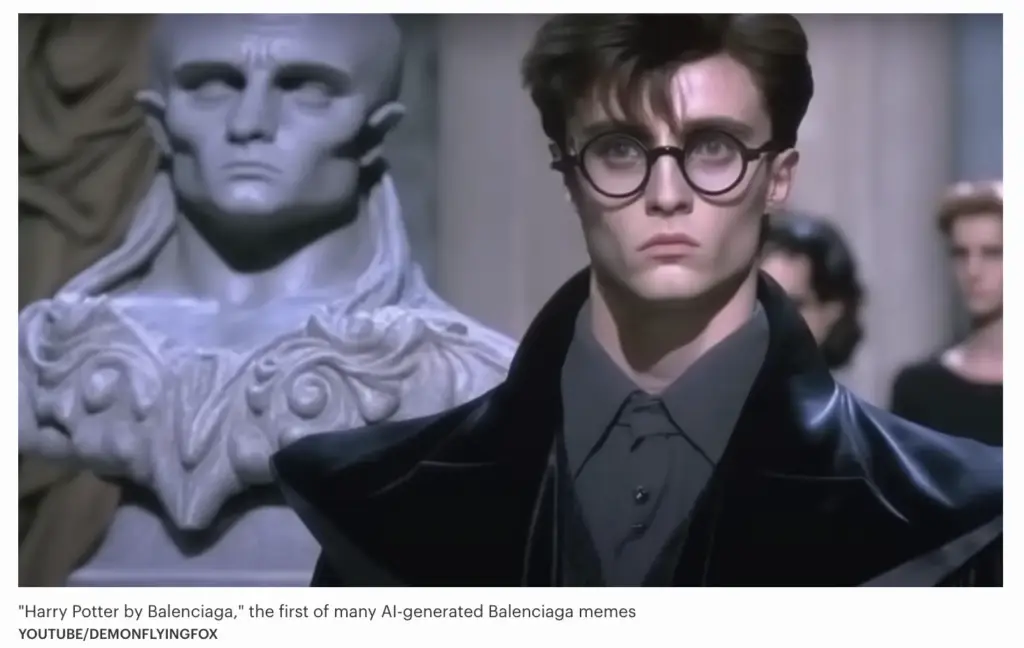
Social media altered that rhythm. Under the creative direction of Demna Gvasalia, Balenciaga became deeply embedded in internet culture. The brand’s exaggerated silhouettes and ironic design language circulated widely through memes and viral edits across social platforms.
Entire waves of internet content reimagined film and television characters dressed in Balenciaga aesthetics. The visibility generated enormous cultural conversation and positioned the brand as a recognizable visual language inside internet culture.
Memes, however, flatten hierarchy. They transform institutions into characters within shared internet humor. When a prestige brand becomes a recurring participant in meme culture, it begins to occupy the same conversational layer as creators and everyday consumer brands.

Case Study: SoulCycle and the Exposure Paradox
Prestige erosion is not limited to luxury fashion. It also appears in categories built around exclusive experiences.
When SoulCycle launched in the mid-2000s, it positioned itself as something closer to a cultural institution than a traditional gym. Classes were limited, instructors developed cult-like followings, and the experience carried strong signals of urban cultural status.
Scarcity was central to the model. Classes frequently sold out within minutes of reservations opening, reinforcing the perception that access itself was part of the brand’s value.
Over time, the broader fitness ecosystem shifted. Digital fitness platforms expanded, streaming workouts became common, and elite fitness brands increasingly documented their experiences across social media.
Visibility increased dramatically. What had once been a semi-private cultural ritual became something audiences could watch, share, and comment on continuously online.
Case Study: Hermès and the Internet Dissects Scarcity
Few brands represent luxury scarcity more clearly than Hermès. The company’s most famous product, the Birkin bag, is intentionally difficult to obtain. Customers typically cannot walk into a boutique and purchase one directly. Access often depends on purchase history, relationships with sales associates, and the availability of specific inventory.
The scarcity is deliberate. Luxury research consistently shows that rarity and exclusivity increase desirability and reinforce the status-signaling function of luxury goods. For decades the Birkin bag has served as one of the clearest symbols of luxury status in the world.
Social media introduced a new cultural layer to that equation. Online audiences now dissect the mechanics of luxury access in extraordinary detail. Videos explaining how to build relationships with sales associates, how much customers typically spend before being offered a Birkin, and how waitlists function circulate widely across TikTok and YouTube.
Instead of remaining opaque, the prestige mechanism itself becomes content. The rituals that once operated quietly inside boutiques are now explained, analyzed, and debated publicly across social platforms.
This visibility has also turned luxury scarcity into material for internet humor. In 2024 the so-called “Walmart Birkin” went viral across social media after a handbag sold through Walmart that visually resembled the Hermès Birkin sparked widespread commentary online. Creators joked about bypassing Hermès’ exclusivity entirely.
The product itself was not a luxury item. But the conversation illustrated something important about prestige in the social era. Scarcity still drives desire, yet when the mechanics of that scarcity become visible and endlessly discussed online, they also become material for parody.
The hierarchy remains. The mystique becomes harder to maintain.
Personal Note: Rep & Replica
I should acknowledge something before going further. I participate in the prestige economy as a consumer. I own more than a few luxury bags, and I have *held* more than a few replicas. If you asked me right now to find you a replica of a classic fashion house handbag, I could probably send you a working link within the hour. If you asked what my favorite bag is, though, the answer wouldn’t be one of the ultra-high-end luxury bags.
It is my Coach Brooklyn bag, and I carry it almost every day.
This is how prestige actually functions in the social era. Access to the appearance of luxury has never been easier. Replica markets are sophisticated, widely networked, and increasingly normalized through online communities. Are some of these bags truly carried daily? Sure. There are certainly some that could fool even a professional eye. Even more so, as luxury handbag makers have come under deeper scrutiny for the quality of the products they are peddling.

Can you complain about loose threads or zippers on a bag you had smuggled in from overseas, the same as you can about one you paid $5k for from a store? No. I think it’s fair to have higher standards for a retail purchase.
Replica factories and dealers participate in the prestige economy from the shadows. The videos they post are often eerily similar to the rituals that luxury brands use themselves. A bag placed carefully on a table. A hand in a black glove slowly turning it to show the leather, the stitching, the hardware. Anyone who has watched a Hermès sales associate remove a Birkin from its box would recognize the choreography immediately.
The language of prestige has been copied almost perfectly. The staging, the lighting, and the careful handling of the object, as if it were rare and precious, all mirror the rituals of luxury retail. The difference is that the audience understands exactly what is happening.
They are watching the performance of exclusivity rather than the institution that created it.
Entire online communities now analyze these details with remarkable precision. On Reddit forums and TikTok accounts dedicated to replica culture, users compare factories, stitching patterns, leather grain, and hardware engravings with the same scrutiny collectors once reserved for the originals.

Fashion journalists have documented this ecosystem in detail as well. A widely cited investigation in The Cut explored the “Repladies” community, an online network where thousands of members shared factory lists, quality reviews, and sourcing guides for replica luxury bags. The reporting showed just how organized and sophisticated the replica economy has become, with buyers analyzing materials, construction techniques, and supplier reputations with the rigor of professional product reviewers.
When the infrastructure of luxury manufacturing and distribution becomes common knowledge inside online communities, the aura of mystery that once surrounded these goods inevitably weakens. This also reveals something else about prestige that luxury brands rarely acknowledge: prestige and luxury are not always the same thing.
A Louis Vuitton bag covered in the classic brown monogram is technically a luxury item. It sits at a similar price point to a Louis Vuitton Capucines bag in smooth black leather. But culturally, they do not function the same way.
The monogram bags are among the most widely replicated products in fashion. They appear constantly in replica markets and across social platforms, which changes how they are interpreted on the street. The Capucines bag circulates far less in those channels. It is quieter, less recognizable at a glance, and far less common in replica culture.
In practice, it signals a different kind of prestige even when the price is similar.
Luxury can be purchased. Prestige depends on context.
Brand and Marketer Implications
Prestige brands face a measurement problem on social media. The metrics used to evaluate performance reward the very behaviors that can gradually weaken prestige positioning. High posting volume increases reach and engagement. Meme participation improves shareability. Informal voice increases interaction. Each tactic can produce strong short-term results inside platform dashboards.
From a social performance perspective, the strategy appears successful. From a brand equity perspective, the signals are more complicated. Prestige brands do not exist to maximize familiarity. They exist to sustain desire. Desire depends partly on distance.
When audiences encounter the brand constantly in casual contexts, the symbolic hierarchy that supports prestige pricing and cultural authority can gradually soften. Inside organizations, this often creates tension between two evaluation systems. Social teams are measured on engagement and cultural participation, while brand teams are responsible for maintaining long-term positioning.
Platforms provide immediate feedback loops for one of those objectives. They provide almost none for the other.
Final Thought
Prestige brands historically controlled when the public could see them. Social media removes that control.
Once prestige becomes ordinary content, it ceases to function as prestige. The shift rarely happens in a single moment. It emerges gradually as the brand becomes easier to see, easier to access, and eventually easier to understand.
Sources & Further Reading
Scarcity as a Desirable Attribute of Luxury Fashion Brands in Millennial Marketing
Luxury Consumption: A Review of Consumer Psychology and Behavior
The Effects of Masstige Strategies on Luxury Brand Perception
Why Consumers Engage With Luxury Brands on Social Media
Bake-at-Home Totes and Meme Culture: The Luxury Brands Winning Digital — Vogue