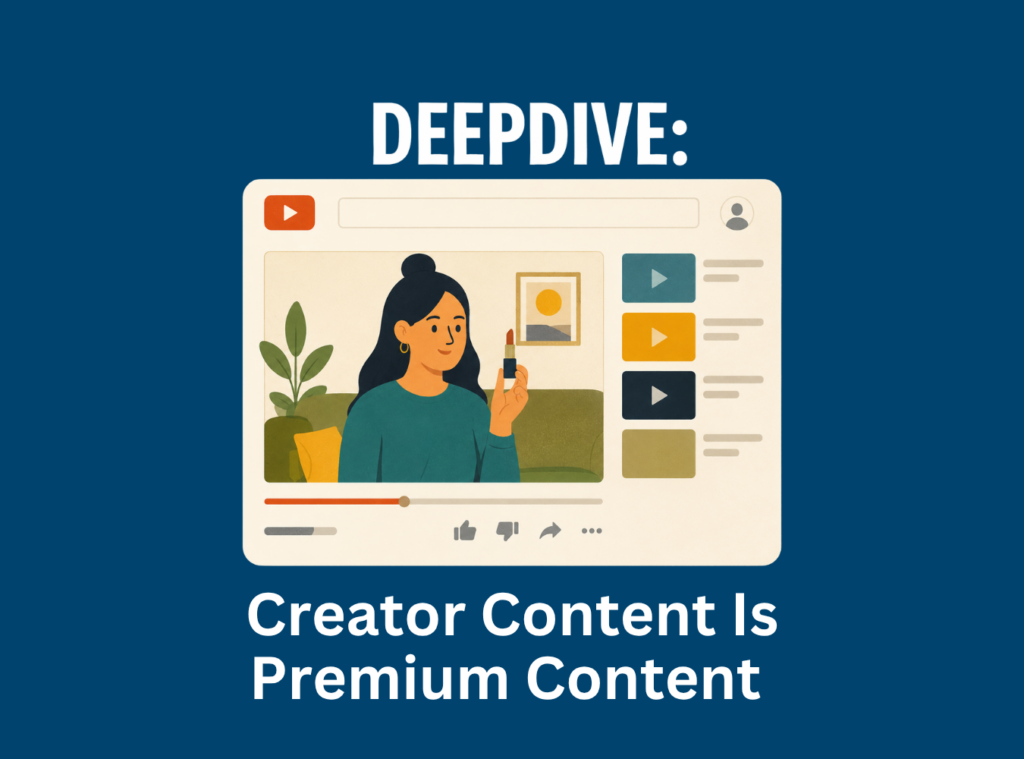
In the age of the creator economy, marketers need to pay as much attention to creator-owned content as studio-owned content when aligning their spend with premium content.
Despite their vastly different business models, as YouTube and Netflix both try to grow their audience, they’ve increasingly been targeting the same content.
Bloomberg just reported that YouTube is currently making offers to around 15 top YouTube creators, where they’d be paid potentially millions of dollars to keep their content exclusive to YouTube for a period of time.
This is largely seen as a response to Netflix’s strategy over the last couple of years of bringing top YouTube shows to Netflix, usually through non-exclusive licenses. That includes kids’ shows like CoComelon and video podcasts, including Netflix signing deals with Spotify for The Ringer podcasts and top Barstool Sports shows. Additionally, they’ve signed licensing deals with comedy creators such as Kevin Langue, variety shows such as Good Mythical Morning, and food shows such as those hosted by Nick DiGiovanni.
This strategy has often been extremely successful for Netflix; for example, the kids’ show Ms. Rachel was the 7th most-watched show on the platform in the first half of 2025, with 53.4 million views, despite only 4 episodes being available at the time.
YouTube and Netflix both prioritizing creator-generated content is a reminder that much of the content audiences most love originates on social media. For marketers, here are a few key things to consider when evaluating how much focus to place on user-generated content when allocating your ad spend.
Creator Content Is Already Considered Premium Content
According to an Interactive Advertising Bureau survey, over 90% of advertisers consider creator content a high-quality ad channel, with nearly all advertisers using the same KPIs to measure both creator and studio content. For most marketers, creator-generated content is already considered just as valuable as studio-generated content.
Creators Are Assuming Near 100% Of The Development Cost
A Visa survey found that 86% of creators are self-funded. Putting their own money behind their content often means creators are working on projects they’re most passionate about. That’s both contagious and creates quirky content that a studio with shareholders to answer to would be less likely to develop. For example, The Stokes Twins have a massive social media audience, including 145 million YouTube subscribers and 31 million TikTok followers. However, their comedy empire started when they were 10 years old and just uploading quick 6-second clips of themselves joking around.
Creators are able to experiment more when they’re self-funded, and while many of those experiments won’t work, when they do connect with the audience, the impact can be huge. For marketers, that strong connection can make creators more effective around paid partnerships.
Paid Partnerships With Creators Are Largely Affordable
MrBeast reportedly charges over $2 million for a 60-90-second product integration in one of his videos; however, overall, a paid partnership with creators is much more affordable. For example, a Neoreach report found only 15% of creators make $100,000 or more per year. The report also found female creators report a median income of $12K, compared with $22K for male creators.
Putting aside that female content creators appear to be massively underpaid, if you can find content creators working in verticals that align with your brand, in most cases both male and female creators would be financially motivated to collaborate on paid partnerships well within your marketing budget.
In A Fragmented Media Landscape, Creators Keep Their Audience
A study by Entertainment Research found that at least 50% of TV viewers can’t identify what streaming service hosts some of the most popular TV shows of the last 30 years. On the other hand, Markiplier has 38.9M subscribers on YouTube, and a fanbase so loyal that when he self-released the film Iron Lung in theaters, it grossed $50 million at the box office.
That’s not to say that traditional TV shows or films aren’t still extremely popular, but in a mobile-first internet culture, creators who have mastered communicating with their fanbase on social media basically have a home-court advantage in staying connected and keeping their audience up to date on their activities.
Creators Are Connecting With Younger Audiences
26% of daily video viewing time is now consumer content, according to a Media Dynamics Inc. survey, while 94% of Gen Z consumers say they trust influencer recommendations more than brand advertising. For brands looking to market to a Gen Z audience, creator content is an essential part of their consumption experience.
Conclusion
Behind the story of YouTube and Netflix targeting the same group of top creators is the larger reality that creator-driven content has become a massive part of the audience’s media consumption.
Sometimes, this content can have a budget as large as that of traditional network or streaming shows; for example, MrBeast spends about $48 million a year on his YouTube videos. In other cases, the economics are vastly different. For instance, while The Late Show With Stephen Colbert costs about $500,000 per episode, a professionally produced video podcast for social media costs about $2,500-$8,000 as a managed service.
What is a through line is that the audience is invested in watching creator-owned content, often on social media, and treats it like premium content. Marketers need to be equally invested in targeting their audience through this format.